Examples of tax-efficient profit extraction for directors

The most tax-efficient sequence for extracting profit from a UK limited company, for most owner-managers, runs in this order: a baseline salary up to the personal allowance, employer pension contributions for anything not needed immediately, then dividends to cover the rest. This hierarchy holds because pension contributions avoid National Insurance and personal income tax entirely at the point of contribution, while dividends are paid from profit that has already suffered corporation tax.
Who fits where depends mostly on whether you need the cash now.
Need income today: salary plus dividends, kept within your basic or higher rate band where possible.
Building retirement savings: employer pension contributions, especially once you are past the personal allowance taper at a specific adjusted income threshold.
Closing the company down: a Members’ Voluntary Liquidation, converting retained profit into a capital distribution rather than a dividend.
This is general guidance, not a substitute for advice tailored to your numbers. Use the checklist later in this piece before making a final call, and treat every figure below as illustrative rather than a promise of your own tax bill.
Key Takeaways
The most tax-efficient extraction sequence uses salary to the personal allowance, employer pension contributions second, and dividends third, with an MVL reserved for permanent closure.
Point | Details |
Salary sets the base | Use the personal allowance of the personal allowance as a deductible, tax-free starting salary. |
Pensions beat dividends for surplus cash | Employer contributions avoid corporation tax, National Insurance and income tax at once, within the the annual allowance annual allowance. |
Dividends fund current spending | Post-tax profit, taxed personally after the dividend allowance, works best for money needed this year. |
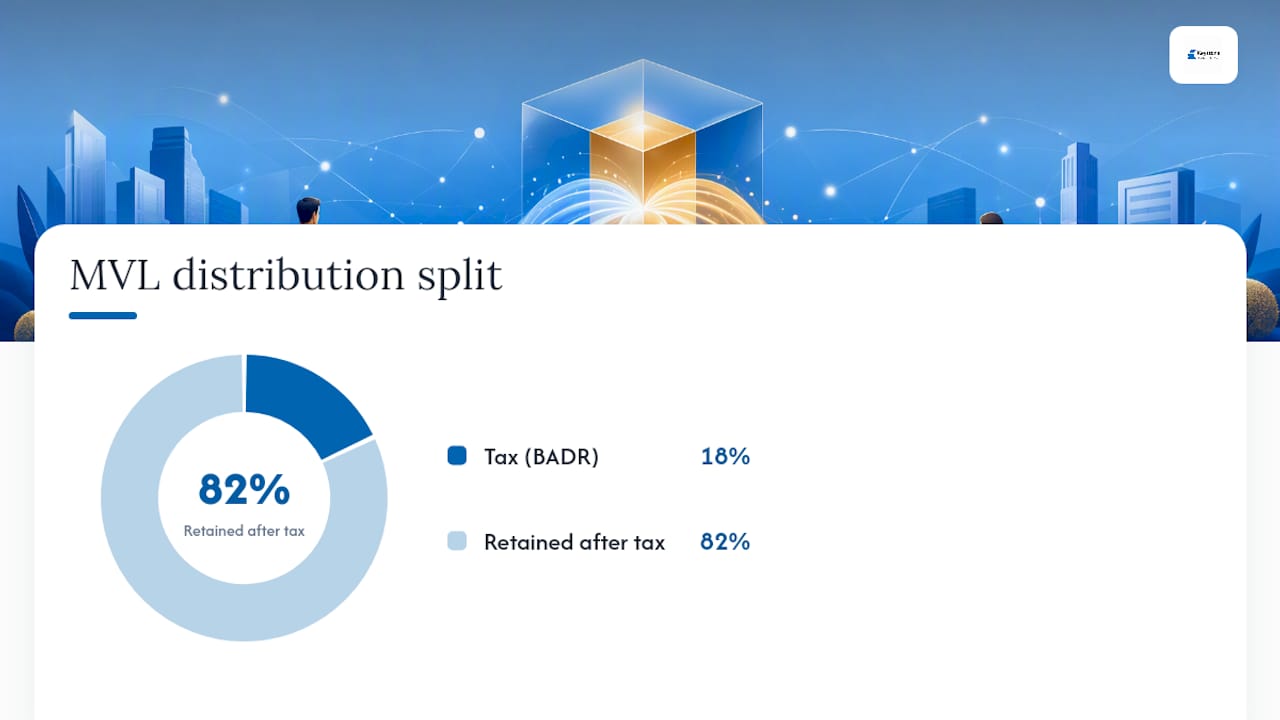
MVL suits genuine closure | Capital treatment plus Business Asset Disposal Relief at 18% can beat dividends for large retained reserves, subject to TAAR risk. |
KeystoneFA models the exact numbers | Their planning service builds a one-page extraction plan around your actual salary, pension and dividend position. |
Table of Contents
Examples of tax-efficient profit extraction across four scenarios
Numbers make this easier to grasp than theory. Here are four common scenarios, using 2026/27 assumptions: a dividend allowance, a small companies’ corporation tax rate up to £50,000 profit, and marginal relief tapering for higher profits.
Extracting around £30,000. A director takes a salary of the personal allowance (covering the personal allowance) and tops up with dividends of roughly £17,430. Corporation tax has already reduced the pot funding those dividends. After the dividend allowance and basic rate dividend tax on the remainder, the director typically nets somewhere in the mid-£20,000s, depending on other income.
Extracting around £50,000. Salary stays at the personal allowance. The remaining £37,430 could go entirely to dividends, but splitting it, say £10,000 into an employer pension and £27,430 as dividends, usually leaves more in the director’s pocket overall, because the pension slice avoided corporation tax, National Insurance and dividend tax altogether.
Extracting around £80,000. This is where the personal allowance taper starts to bite for a sole director close to the personal allowance taper threshold of adjusted income. Routing a meaningful chunk, perhaps £20,000 to £30,000, into an employer pension instead of dividends keeps adjusted income below the taper threshold and avoids the effective 60% marginal rate on the the personal allowance taper threshold to £125,140 band.
Extracting retained profits on closure. A company with £150,000 in retained reserves winding up via a Members’ Voluntary Liquidation could see that distribution taxed as capital rather than income. With Business Asset Disposal Relief, qualifying shareholders pay 18% on gains up to the lifetime limit, compared with dividend tax rates that would otherwise apply on the same sum taken as income over several years.
Assumptions used above: 2026/27 tax year, dividend allowance, corporation tax rates per the current gov.uk bands, and BADR at 18% from April 2026.
Pro Tip: Run your own numbers with an accountant before committing to any of these routes. A £5,000 shift between salary, pension and dividends can move your net outcome by hundreds of pounds once National Insurance, the dividend allowance and the personal allowance taper all interact.
Salary versus dividends: how each is taxed
A small salary, usually set at the personal allowance, makes sense because it is a deductible expense for the company and costs the director no income tax. Dividends make sense for topping up income beyond that point, since they carry no employee National Insurance charge, though they are paid from profit that has already been taxed at the corporation tax rate.
The trade-offs differ sharply between the two:
Salary: reduces corporation tax as a business expense, but triggers employer and employee National Insurance above the secondary threshold, and counts towards qualifying years for the State Pension.
Dividends: no National Insurance at all, but paid from post-tax profit and taxed personally under the dividend allowance and dividend tax rates, and they do not count towards State Pension qualifying years.
A common pattern for a sole director is salary at personal allowance level plus dividends covering the rest of their income needs, which typically beats an all-salary or all-dividend approach once you add up the combined tax and National Insurance cost. One caution worth flagging early: dividends must be properly documented with board minutes and dividend vouchers, and paid only from distributable profits, or HMRC can recharacterise them as salary or a loan.
Why employer pension contributions usually top the ranking
Employer pension contributions are usually the most tax-efficient way to extract money you do not need immediately, because they sidestep three tax charges at once: corporation tax, National Insurance, and personal income tax at the point of contribution.

The company deducts the contribution as a business expense, cutting the corporation tax bill. No employer or employee National Insurance applies, and the director pays no income tax on the money until it is eventually drawn from the pension in retirement, often at a lower effective rate.
Limits still apply. The annual allowance sits at a specified limit, with carry-forward available across the previous three tax years if you have unused allowance. Contributions must meet the “wholly and exclusively” test for business purposes, and it helps to keep a short paper trail: board minutes approving the contribution, a note of the commercial rationale, and confirmation the amount fits within the director’s remaining allowance.
Pro Tip: If you are near the the personal allowance taper threshold adjusted income threshold, coordinate pension timing with an independent financial adviser. A well-timed contribution can pull your adjusted income back under the taper and avoid the 60% effective rate on the band above it, a trap covered in more detail below.
Directors’ loans: extracting money short-term
A director’s loan can bridge a short-term cash gap, but it attracts a punitive tax charge if it stays outstanding for too long. Loans not repaid within nine months of the company’s year end trigger a corporation tax charge under section 455.
Common scenarios worth knowing:
Drawing an overdrawn loan account and repaying it within nine months avoids the charge entirely.
Repaying just before the deadline, then re-borrowing shortly after invites HMRC scrutiny under “bed and breakfasting” rules.
Interest-free or low-interest loans over £10,000 create a taxable benefit in kind for the director.
If the loan remains outstanding past nine months, the company pays section 455 tax at a higher rate on the balance, refundable once the loan is repaid, though the refund can take time to claim back from HMRC. Keep clear records of drawdowns and repayments, since a loose or informal loan account is one of the first things HMRC checks.
Members’ Voluntary Liquidation and capital distributions
When a company is closing permanently, a Members’ Voluntary Liquidation can turn retained profits into a capital distribution taxed under Capital Gains Tax rather than as income, and that is often the more efficient outcome for larger reserves.
The process follows a fairly fixed sequence:
Confirm the company is solvent and can pay all debts within twelve months.
Appoint a licensed insolvency practitioner to oversee the liquidation.
Distribute the reserves to shareholders as capital.
Report the gain and claim any available reliefs on your tax return.
Qualifying shareholders can claim Business Asset Disposal Relief at 18% from 6 April 2026, subject to a £1 million lifetime limit, a marked contrast with dividend tax rates on the same sum. HMRC’s Targeted Anti-Avoidance Rule can recharacterise the distribution as income if the same individual starts a similar trade within two years, so this route suits genuine closures, not a repeated extraction trick.
A company with £150,000 in reserves distributed via MVL and BADR could see meaningfully more retained after tax than the same sum drawn down as dividends over several years, though the exact gap depends on the shareholder’s other income and gains that year.
Pro Tip: Budget for liquidator fees, typically a few thousand pounds depending on complexity, and start the MVL conversation with your accountant at least a few months before you plan to stop trading.
Other extraction routes worth knowing about
A handful of less common options can shave further tax off larger extractions or diversify how you hold wealth once it leaves the company.
Family employment: paying a spouse or adult child a market-rate salary for genuine work uses a second personal allowance.
EIS or VCT investment: offers income tax relief for investors willing to accept higher risk, worth considering once other routes are exhausted.
ISAs: shelter future investment growth on extracted profit from further tax, though the money must first leave the company and be taxed on the way out.
Renting property to your own company: can extract value through rental income, covered in more detail below.
Company-owned property and family employment both carry complexity, benefit-in-kind risk, and sometimes VAT implications, so treat them as areas needing specialist sign-off rather than a quick win. Cross-border structures or anything touching TAAR exposure deserves the same caution.
Pro Tip: Anything involving a related party, a spouse’s salary, a company-owned asset, or a rental arrangement, needs commercial terms documented in writing before HMRC ever asks.
A checklist for choosing between extraction methods
Start with the basics: how much cash do you need now, how much pension allowance do you have left, are you near the personal allowance taper threshold, and is the company solvent enough to consider a future MVL.
From there, work through a short list:
Decide your baseline salary, usually the personal allowance of the personal allowance.
Check your pension annual allowance and any unused carry-forward from the last three years.
Set a dividend budget based on what you actually need this tax year.
Review your director’s loan account for anything close to the nine-month deadline.
Assess whether the company is winding down and an MVL might suit.
Confirm distributable profits before declaring any dividend.
Take these to your accountant with specific questions: what is my remaining pension allowance, how close am I to the taper, should any reserves go into a pension instead of dividends this year, and what would MVL cost in fees and timescale. A short planning call usually replaces weeks of guesswork, and Keystone’s guide on retaining versus extracting profit is a useful starting point before that conversation.
Bonuses versus dividends: the personal allowance angle
A bonus and a dividend both move money from the company to the director, but they hit different tax layers entirely. A bonus is a salary payment, deductible against corporation tax, but subject to employer and employee National Insurance plus income tax at your marginal rate. A dividend is paid from post-tax profit, has no National Isurance charge, but is taxed personally at dividend rates once the £500 allowance is used up.
For most directors already at the personal allowance, a further bonus tends to cost more overall than a dividend of the same size, because National Insurance stacks on top of income tax.
There is one exception worth flagging: a bonus timed to use up remaining personal allowance headroom, for a director who has taken a lower salary earlier in the year, can still make sense. It is also the only route of the two that builds qualifying years towards the State Pension, since dividends do not count for that purpose. For most ongoing extraction planning though, dividends usually beat bonuses once National Insurance is factored in, which is part of why the salary-plus-dividend pattern dominates practitioner advice over salary-plus-bonus.
Using the Employment Allowance to cut National Insurance
The Employment Allowance reduces the employer National Insurance a company pays, which matters directly if your extraction strategy includes a salary above the secondary threshold. Eligible companies can offset employer National Insurance liabilities up to the allowance’s current limit, though single-director companies with no other employees are usually excluded from claiming it.
If your company does employ others, even part-time, checking eligibility is worth five minutes. Combined with careful salary structuring, a spouse on payroll for genuine work, a small team below the relevant thresholds, the Employment Allowance can materially cut the National Insurance drag on salary-based extraction.
Beyond the Employment Allowance, a few other reliefs are worth checking each year: the employment allowance interacts with how you structure any family payroll, and reviewing your National Insurance position alongside your pension contributions often reveals a few hundred pounds of easy savings that get missed when directors focus purely on the salary-versus-dividend decision. None of these reliefs change the core hierarchy, salary, then pension, then dividends, but they do shave the edges off the National Insurance cost sitting underneath salary decisions.
The recommended order for extracting profit
The sequence that consistently comes out ahead in worked examples is salary to the personal allowance first, employer pension contributions second, dividends third, and only then the more specialised routes like directors’ loans or an eventual MVL.
This order works because each step exhausts the cheapest tax treatment before moving to the next. Salary at the personal allowance costs no income tax and is deductible for the company. Pension contributions after that avoid all three layers of tax, corporation tax, National Insurance, and income tax, at the point of contribution. Dividends then mop up whatever income you still need this year, taxed once at the personal level after corporation tax has already applied at the company level.
Practitioner guidance consistently repeats this three-step hierarchy, and the 2026/27 changes to the dividend allowance, now just £500, make pensions relatively more attractive than they were a few years ago, when dividends carried a larger tax-free slice. Directors’ loans and MVLs sit outside this ongoing sequence. A loan is a short-term bridge, not a recurring extraction method, and an MVL only makes sense once, at the point the company actually closes. Treat the three-step hierarchy as your annual routine and the other two as situational tools for specific circumstances.
Renting property to your own company
If you own a property personally and lease it to your own limited company at a commercial rent, the company gets a deductible expense and you receive rental income taxed under the property income rules rather than as salary or dividends.
This route works because rental income sits in its own tax category, with its own personal allowance-style treatment through the property income allowance for very small amounts, and it does not attract National Insurance either way. It can be a genuinely useful diversification for a director who owns commercial premises the company uses, an office, a workshop, storage space, provided the rent charged reflects a real market rate.
The catches are real, though. HMRC expects the arrangement to be commercial, so an inflated rent designed purely to shift profit out of the company at a lower tax cost will get challenged. If the property was ever used for something else, or the company later buys the property from the director, Capital Gains Tax and Stamp Duty Land Tax considerations both come into play. VAT can also apply if the company is registered and the lease is structured incorrectly. This is a route worth exploring only where you already hold suitable property, not one to create from scratch purely for tax purposes.
How we typically advise clients
Most clients land on the same pathway: salary to the personal allowance, pension contributions to soak up whatever they do not need this year, then dividends for the rest. One recurring pattern we see is a director assuming dividends are always simplest, until they realise a modest pension contribution would have kept them out of the personal allowance taper entirely.
KeystoneFA’s team includes accountants who have worked across UK and Middle East firms, and the advice here reflects that combined experience rather than a single formula. If your numbers sit anywhere near the the personal allowance taper threshold mark, or you are weighing an MVL, that is worth a proper modelling conversation rather than a rule of thumb.
How Keystone can help with profit extraction planning
Working through salary, pension, dividend and MVL options in isolation is manageable. Doing it while running a business, and getting the sequencing and paperwork right for HMRC, is where most directors lose time or money. KeystoneFA builds the modelling around your actual numbers rather than a generic ranking, so the plan reflects your personal allowance position, pension capacity and company cashflow, not a one-size template.
[

](www.keystonefa.co.uk)
KeystoneFA’s tax planning service covers salary and dividend structuring, pension contribution modelling, MVL support for directors closing a company, and year-end planning that catches allowances before they’re lost. Every planning engagement ends with a practical deliverable, a one-page extraction plan or a modelling spreadsheet you can act on immediately or take to your accountant for sign-off. If you want to see how the hierarchy applies to your own figures, book a planning call through KeystoneFA’s accountancy team and get a concrete number instead of a rule of thumb.
Sources
FAQ
What is the most tax-efficient way to extract money from a limited company?
For most directors, it is a combination: salary to the personal allowance, employer pension contributions for surplus cash, then dividends for the rest, a sequence KeystoneFA uses as the starting point for most client plans.
What is the 60% trap?
It refers to the effective 60% marginal tax rate created when adjusted income between the personal allowance taper threshold and £125,140 triggers the personal allowance taper, and it can often be reduced with a well-timed pension contribution.
What are examples of tax-efficient investments?
ISAs shelter investment growth from further tax once profit has left the company, while EIS and VCT schemes offer income tax relief for investors willing to accept higher risk, though both sit outside the core extraction hierarchy.
Is a Members’ Voluntary Liquidation always more tax-efficient than dividends?
Not always. It usually suits companies with large retained reserves that are closing permanently, since capital treatment and Business Asset Disposal Relief can beat dividend tax rates, but HMRC’s anti-avoidance rules apply if the same trade continues elsewhere.
Recommended